

The Fiery Furnace at Babylon

Daniel chapter 3 relates that Nebuchadnezzar set up a golden image outside Babylon, on the plain of Dura. As the chapter unfolds, he commands everyone present to bow down and worship the image or be thrown into a furnace of blazing fire (Dan 3:5-6). What did this furnace look like, why was it there, and how could it hold several men and have an opening by which one could look inside?
Furnaces or kilns of various sizes were used widely in antiquity. Small furnaces were used for smelting metal ore, or for working metal. However, smelting was usually done at the source of the ore, which would not have been anywhere near Babylon since Babylon was located on an alluvial plain next to the Euphrates River and any kind of stone at all. Metal smelting furnaces are usually about the size of a beehive, much too small for the furnace on the plain of Dura.
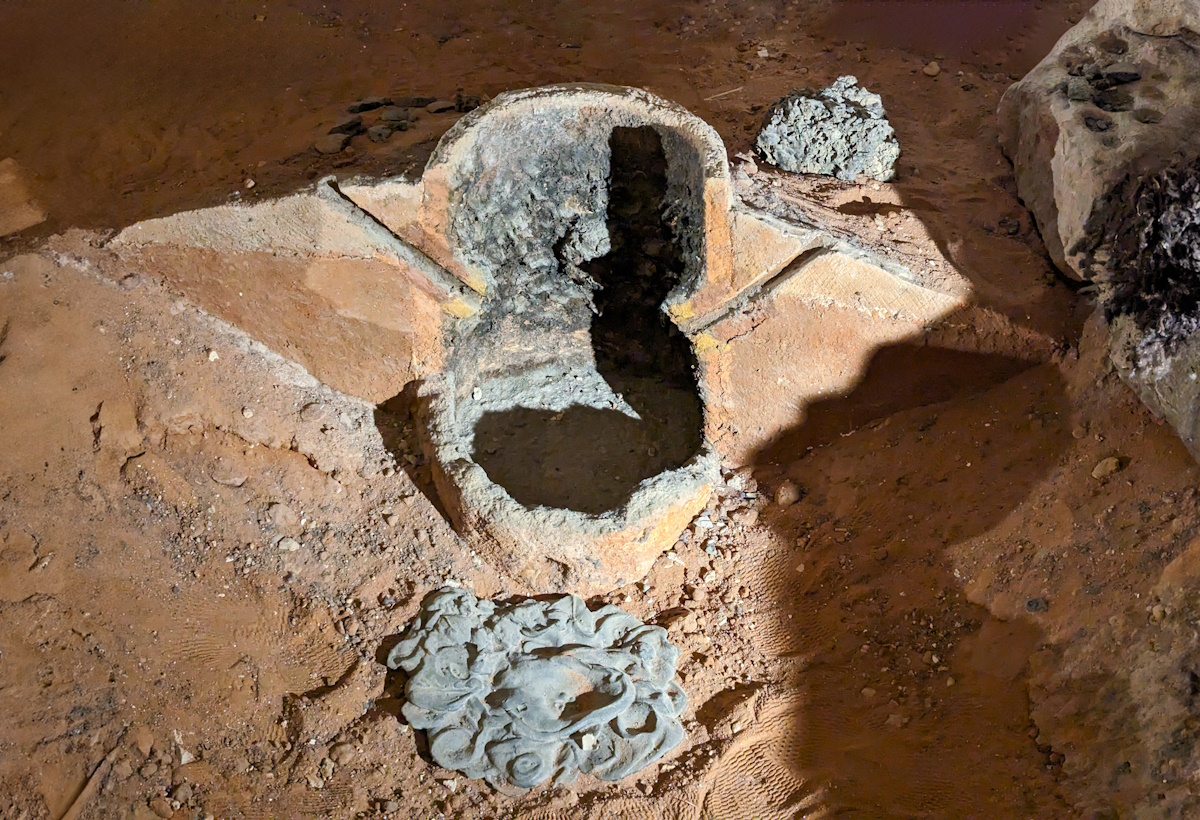
Reproduction of a dome-shaped copper smelting furnace from Timna in southern Israel, 10th century BC; roughly 18 inches tall; photo by Kris Udd.
Much larger furnaces were used firing pottery or bricks. These kinds of kilns tended to be quite large. After all, the larger the kiln, the more material could be fired at a time. This would have been especially true of brick kilns, and the vast majority of structures in Mesopotamia were built of brick (either unfired mudbrick or bricks that had been fired; cf. Gen 11:3, which describes the Tower of Babel as made of baked bricks).
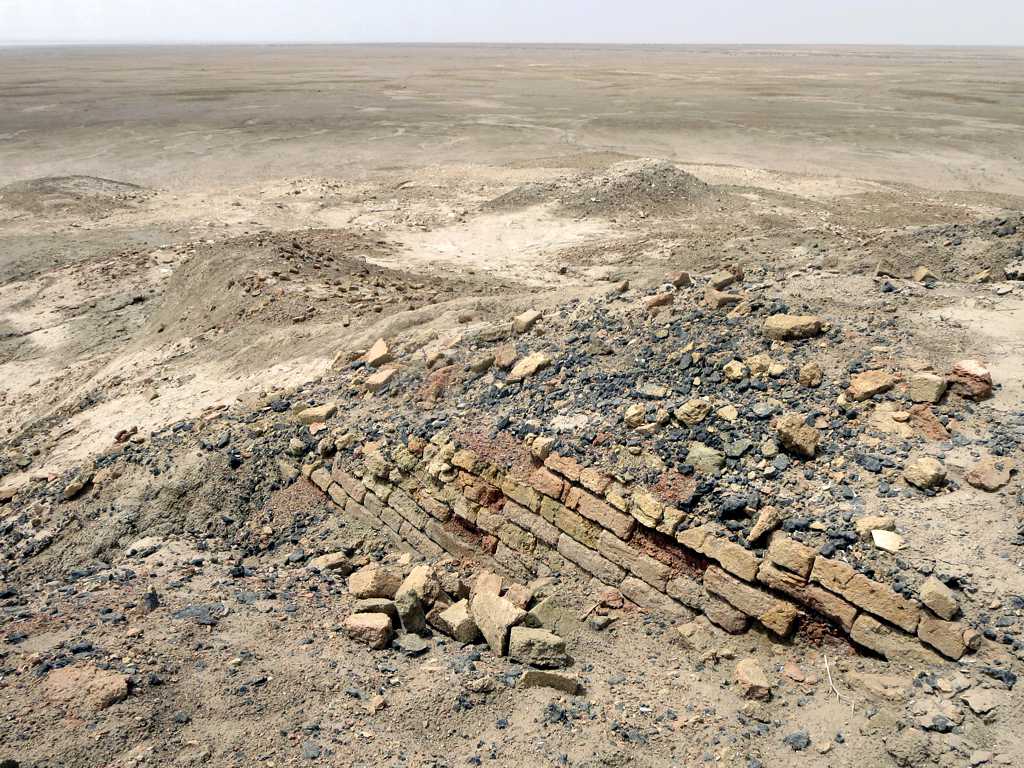
Baked bricks bonded with tar, at the ziggurat at Eridu, circa 2100 BC; photo from Wikimedia Commons.
Why was a furnace there?
It seems likely that the large statue (60 cubits = c. 90 ft; Dan 3:1) built by Nebuchadnezzar would have been set on a platform, and the obvious choice for building material such a platform would have been fired brick. However, even without such a direct link, the presence of a large brick kiln (or several of them) in the vicinity of Babylon would have been necessary for general construction purposes within the city. Virtually every building within the city, including houses, temples, the royal palace, and even the city walls were constructed of brick.
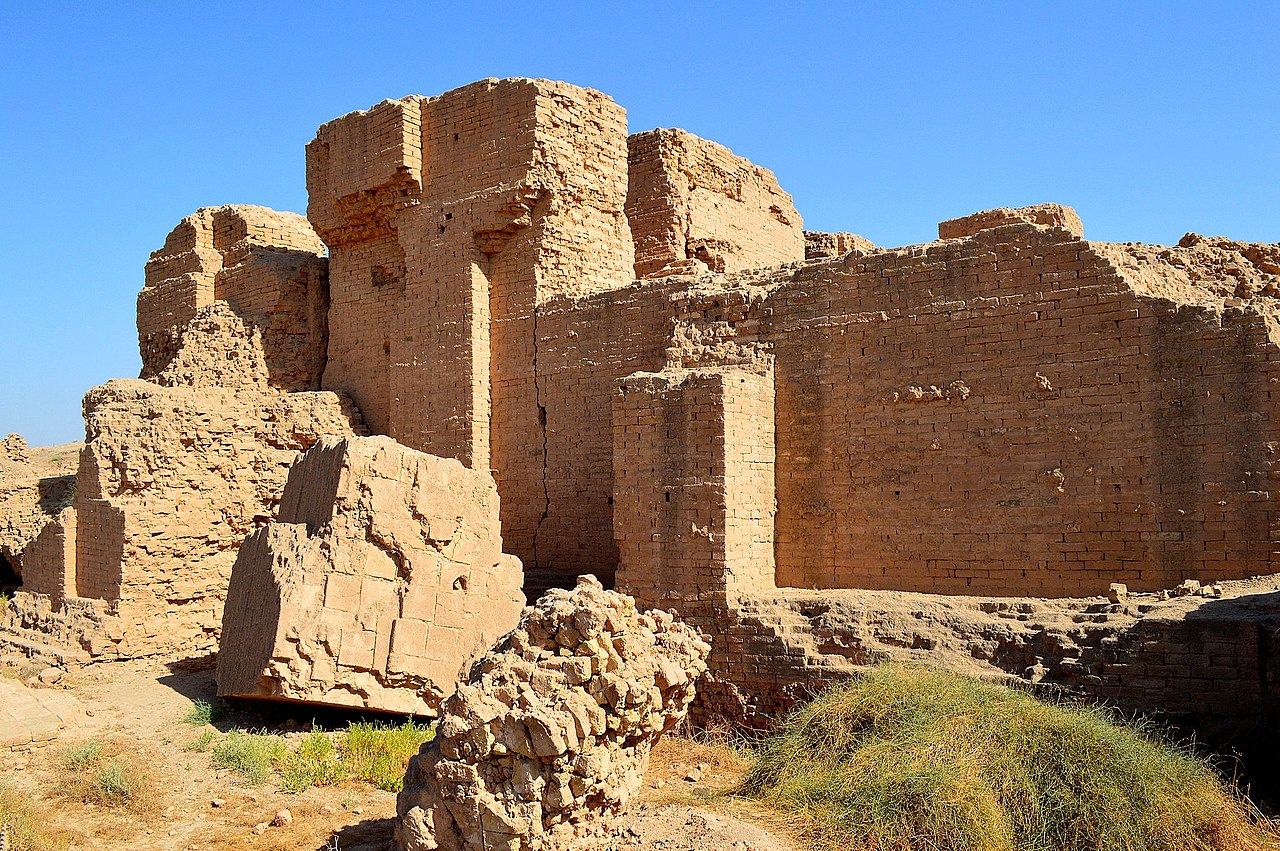
Ruins of the north palace of Nebuchadnezzar at Babylon, made entirely of fired brick, 6th century BC; photo from Wikimedia Commons.
How could anyone see inside?
Every furnace or kiln had to be accessible. The materials to be fired had to be carried in, arranged in a way that allowed all surfaces to be as evenly heated as possible, and the finished product had to be carried back out after everything had cooled. This meant that an entrance had to be built, typically on the level of the ground. Note that Nebuchadnezzar approached, and apparently looked through, the “door” of the furnace (Dan 3:26). It was also necessary to have a hole on the top, sometimes quite large, in order to create the draft that was needed to heat the fire to the proper temperature.
Could a furnace hold four men?
Many pottery or brick kilns of antiquity were large enough to easily hold four men, or many times that number. Even pottery kilns used in Greece around the 5th century BC (a less developed region at that time) were sometimes large enough that a ladder was required to get up the side and test the heat coming off the top.
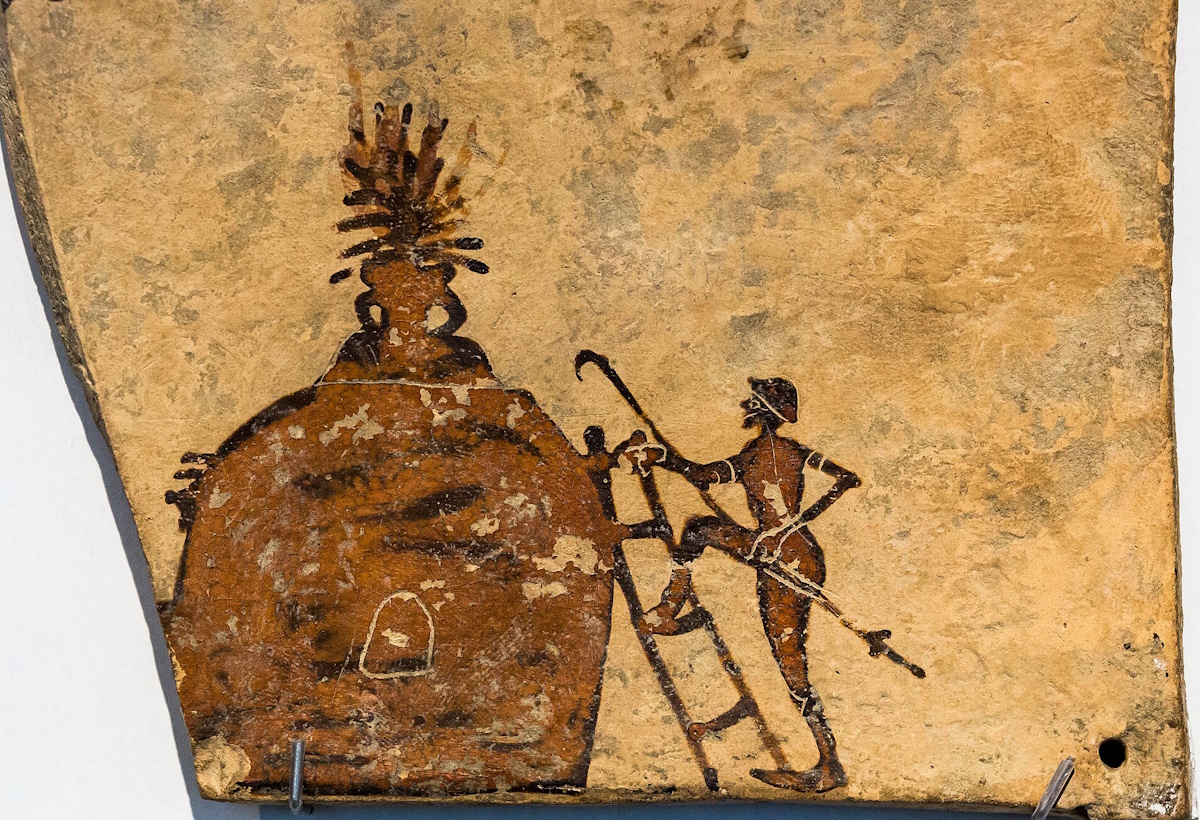
Greek potter with a hooked staff and a stoking rod climbing the side of a pottery kiln, circa 600 BC; photo from Wikimedia Commons.
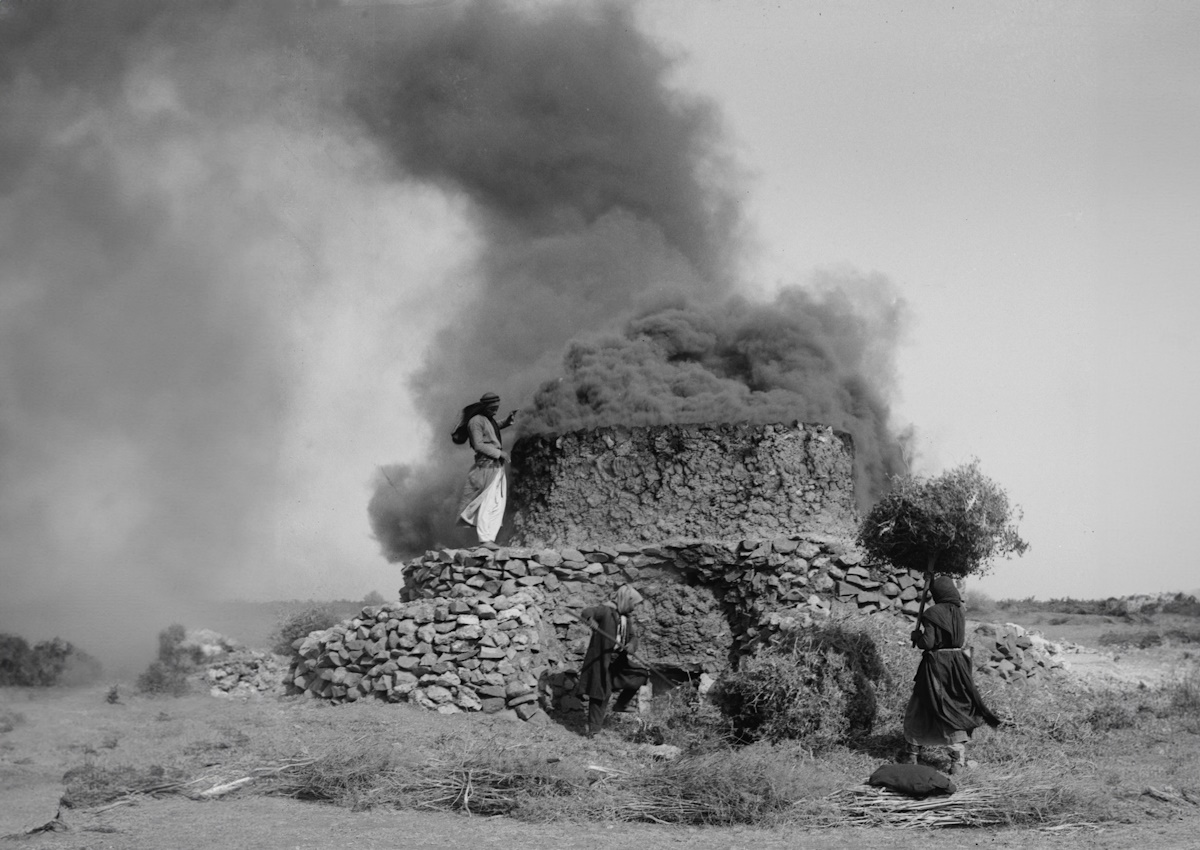
It may also be helpful to see some more modern examples of large kilns that are still used in this region. They use the same ancient technology.
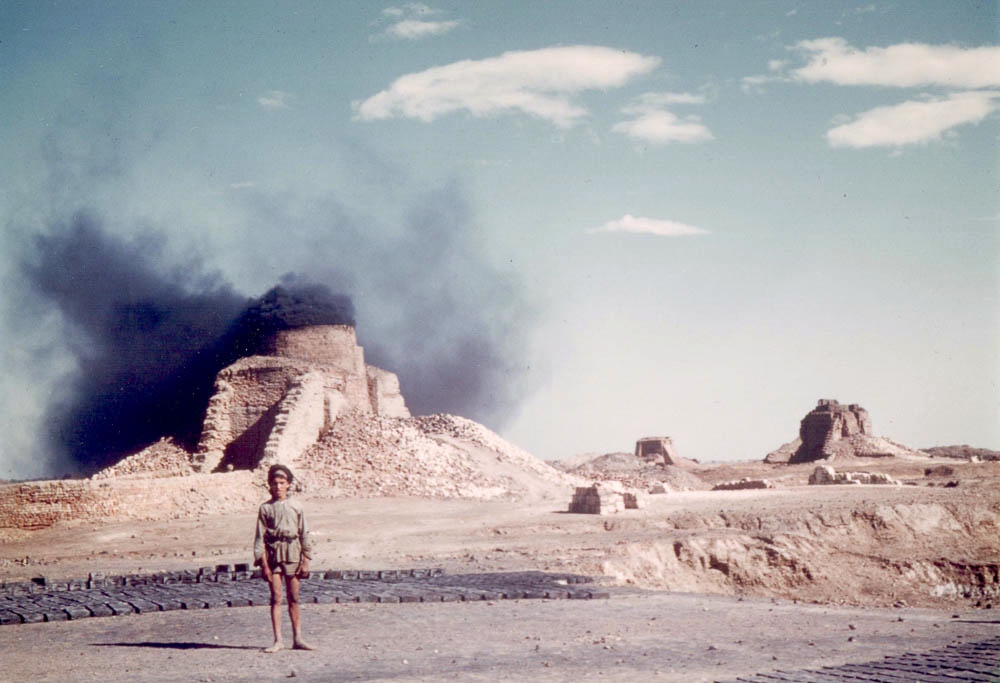
Large brick kiln in Iraq, 1950s. This photo was taken by Christine VandeKerk, via BiblePlaces.com; used by permission.
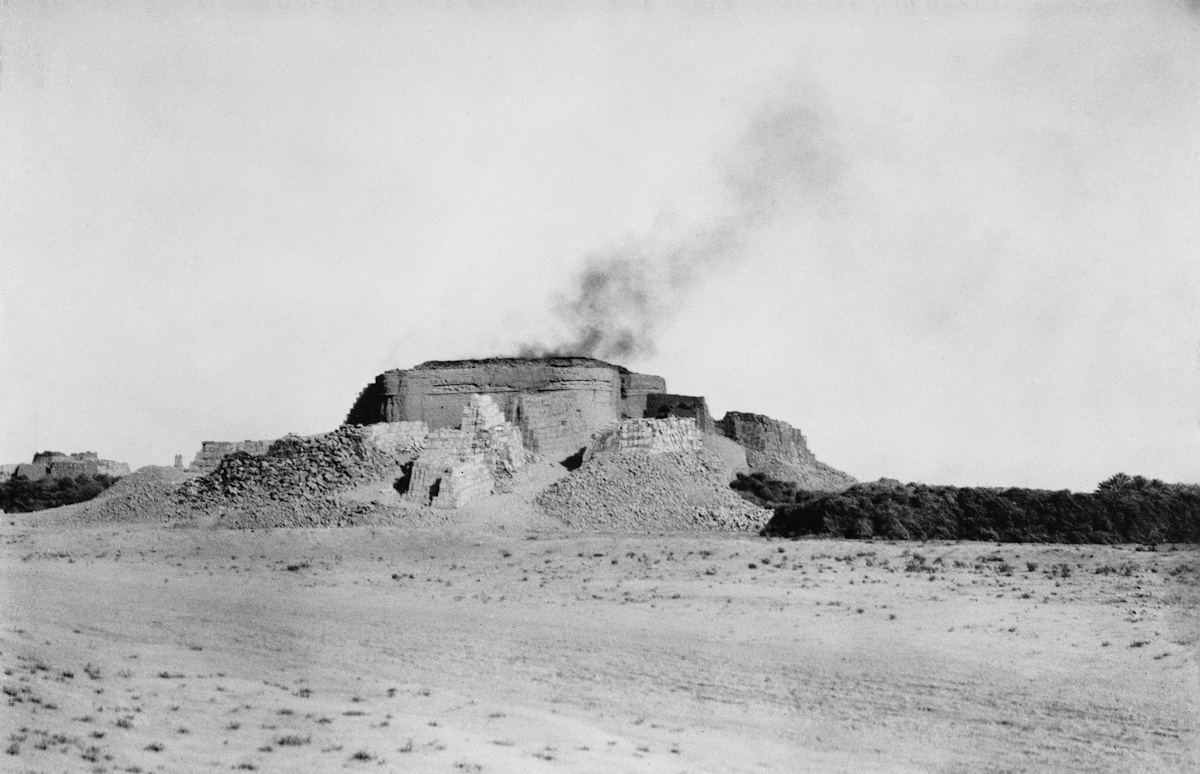
Brick kiln near Baghdad, Iraq, 1932; this image comes from the Library of Congress, G. Eric and Edith Matson Photograph Collection.
It seems logical to conclude, then, that the fiery furnace on the plain of Dura was probably a brick kiln, and there may even have been more than one in the vicinity. Such a furnace would certainly have been of sufficient size to allow men to walk around inside, and it would have had both an access hole at the top and at the foot of the structure.
